
You walk through a modern warehouse and notice fewer people lifting heavy boxes. In a hospital corridor a machine rolls past carrying supplies. On a construction site a robotic arm places materials with steady precision. These scenes no longer feel like science fiction. Robotics innovation has moved from controlled factory lines into messy, real-world environments, and the pace is accelerating. Understanding the breakthroughs that actually matter helps you see where jobs, processes, and business models are shifting—and how to prepare.
Why Robotics Innovation Feels Different This Time
Earlier generations of industrial robots stayed behind safety cages performing the same motion thousands of times. The new wave combines better sensors, more flexible software, and lower costs. Machines can now adapt to slight variations, work beside people, and handle tasks that once required human dexterity. That combination opens doors in logistics, healthcare, agriculture, manufacturing, and construction.
The change creates both efficiency gains and workforce questions. Companies that adopt thoughtfully often see higher output and fewer injuries. Workers who learn to collaborate with or oversee these systems keep their value. Those who ignore the shift risk finding their roles redesigned around them. The practical response is to watch the specific breakthroughs reaching commercial scale and decide where they intersect with your industry.
Collaborative Robots Become Everyday Partners
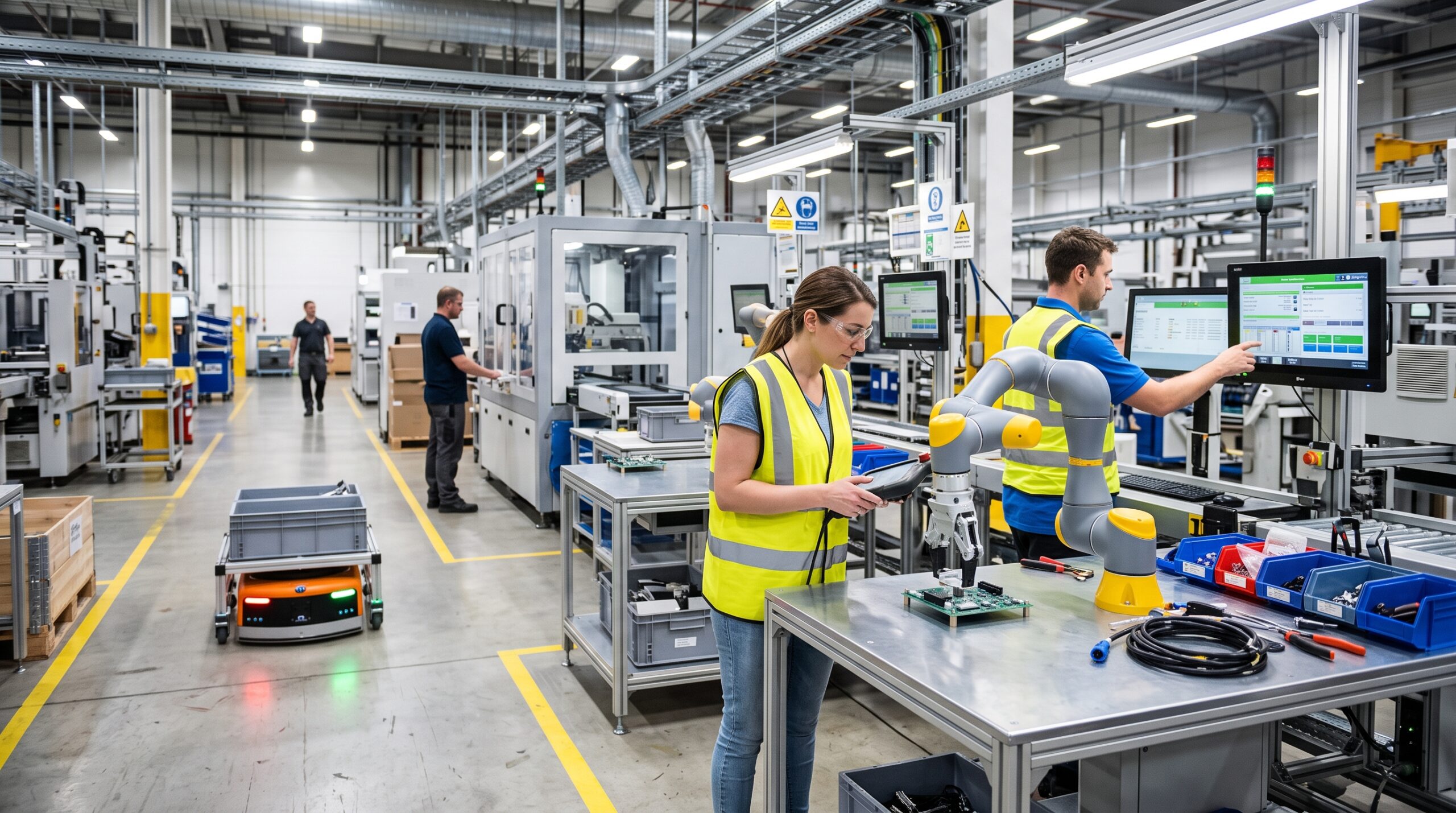
Collaborative robots, or cobots, represent one of the clearest advances. Unlike traditional industrial arms, many cobots can operate without heavy guarding because they sense contact and slow or stop. Setup times have dropped. Some models can be taught new tasks by demonstration rather than complex programming. Small and mid-sized manufacturers now deploy them for machine tending, packaging, and assembly work that previously stayed manual.
A hypothetical production supervisor at a parts supplier introduced two cobots for repetitive loading tasks. Within months the human team moved to quality checks and process improvements. Output rose while strain-related absences fell. The key was treating the robots as tools that removed the dullest work rather than replacements for the entire crew.
For managers the actionable step is clear. Identify the highest-volume, lowest-variation tasks in your operation. Pilot a cobot on one of them. Measure cycle time, error rates, and worker feedback before expanding.
Mobile Robots Reshape Logistics and Warehousing
Autonomous mobile robots have moved beyond simple guided paths. Newer systems navigate dynamic spaces, avoid people and obstacles, and coordinate in fleets. Large fulfillment centers already rely on them to bring shelves to workers or move goods between zones. The same technology is spreading into hospitals for supply delivery, hotels for room service, and factories for material transport.
The advantage is flexibility. Fixed conveyor systems require major redesign when layouts change. Mobile robots can be reprogrammed or redirected with software updates. Labor shortages in logistics have accelerated adoption because the machines handle the walking and lifting while people focus on exceptions and complex decisions.
If your work involves material movement, start mapping the routes that consume the most walking time. Those paths often deliver the fastest return when automated. Training staff to manage robot fleets and handle edge cases becomes a valuable new skill set.
Advances in Sensing and Dexterity Open New Tasks
Vision systems and force sensors have improved dramatically. Robots can now identify objects in cluttered bins, adjust grip strength for fragile items, and perform assembly steps that once demanded human touch. Soft robotics and adaptive grippers expand the range further. Tasks such as picking irregular produce, handling delicate electronics, or assisting in surgery become more feasible.
In agriculture, robotic harvesters for certain fruits and vegetables are moving from trials to commercial use in regions facing labor shortages. In electronics manufacturing, higher precision reduces defects on small components. Each improvement chips away at the list of jobs considered “too hard for robots.”
The practical implication for businesses is to re-evaluate processes previously left manual because of variability. New sensing capabilities may have closed the gap. For workers, developing skills in robot teaching, vision system tuning, and exception handling offers a path that stays relevant.
Healthcare and Service Robots Gain Real Traction
Hospitals face persistent staffing pressure. Robots that deliver medications, transport linens, or disinfect rooms free clinical staff for patient care. Surgical robots continue to refine precision and reduce recovery times for certain procedures. Rehabilitation devices assist patients with guided movement. These systems do not replace doctors or nurses. They remove repetitive logistics and support more consistent execution of specific tasks.
Service environments show similar patterns. Cleaning robots handle large floor areas overnight. Security robots patrol predictable routes. The common thread is reliability on structured, repeatable work. Human staff remain essential for judgment, empathy, and complex problem-solving.
Healthcare administrators evaluating these tools should focus on integration with existing workflows and clear metrics—time saved, error reduction, staff satisfaction. Early pilots that involve the people who will work alongside the machines produce better adoption than top-down mandates.
Construction and Outdoor Robotics Tackle Tough Environments
Construction has lagged behind factories in automation because sites change daily and conditions are unpredictable. That is starting to shift. Robotic systems for bricklaying, rebar tying, welding, and material placement are reaching commercial viability. Drones and ground robots handle surveying and progress monitoring with greater speed and safety. Autonomous or semi-autonomous equipment for earthmoving appears in controlled projects.
The gains show up in consistency and reduced physical strain. Projects that adopt these tools often report tighter schedules and fewer injuries on repetitive high-risk tasks. Weather, uneven terrain, and coordination with human crews still present challenges, yet each generation of hardware and software narrows the gaps.
Contractors can begin by targeting the most repetitive structural tasks or the most time-consuming documentation work. Partnering with technology providers for on-site trials reveals what works in real conditions faster than brochure claims.
How Organizations and Individuals Prepare for the Shift
Robotics innovation rewards clear-eyed assessment over hype. Map the processes in your operation that combine high volume, physical strain, or precision requirements. Those areas usually surface the strongest candidates for automation. Run limited pilots with defined success metrics. Involve the people currently doing the work—they often spot practical issues and improvement ideas that outsiders miss.
Skill development matters as much as the machines. Roles that blend technical oversight, process design, and human judgment grow in value. Learning to program simple robot tasks, interpret sensor data, or manage mixed human-robot teams creates durable career options. Many community colleges and equipment vendors now offer short practical courses.
For smaller companies the barrier has dropped. Leasing models, easier programming interfaces, and proven applications in similar businesses reduce risk. The organizations that treat robotics as a continuous capability rather than a one-time purchase adapt more smoothly when the next wave of improvements arrives.
Robotics innovation is no longer confined to automotive plants. It is reshaping how goods move, how care is delivered, how buildings go up, and how routine physical work gets done. The companies and people who experiment early, measure honestly, and build complementary skills will shape the transition instead of being surprised by it. Look at one process in your world this month that feels ripe for assistance. Test whether current technology can help. The insight you gain compounds faster than waiting for perfect solutions.
FAQ
What industries are seeing the fastest impact from recent robotics innovation?
Logistics, manufacturing, and healthcare currently show the broadest commercial deployment. Warehousing mobile robots, collaborative arms on production lines, and hospital delivery systems have moved past pilot stages in many organizations.
Do robots mainly replace jobs or change them?
In most current deployments robots take over specific repetitive or physically demanding tasks while humans shift toward oversight, exception handling, quality control, and process improvement. Net employment effects vary by industry and how deliberately companies manage the transition.
How can a small or mid-sized company start with robotics without a huge budget?
Begin with a single high-volume repetitive task and a collaborative robot or mobile platform that offers straightforward programming. Many suppliers provide leasing options and application support. Measure results on one cell before expanding.
What skills help workers stay valuable as robotics spreads?
The ability to teach or program robots for new tasks, troubleshoot common errors, interpret data from sensors and vision systems, and design workflows that combine human and machine strengths. Soft skills around training others and managing change also matter.
Are there still major limitations holding robots back?
Yes. Highly unstructured environments, tasks requiring complex judgment or delicate human interaction, and situations with extreme variability remain difficult. Cost, integration effort, and the need for reliable sensing in messy real-world conditions continue to shape the pace of adoption.
Leave a Reply